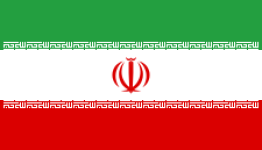

Tehran has officially declared that it will retaliate against any country that cooperates with the U.S. This announcement came as the U.S. positions itself as a major financial offensive, intending to impose secondary sanctions on nations trading with Iran. Treasury Secretary Scott Bessent, in a CNBC interview, said: "The U.S. will inevitably bring Iran to collapse with the toughest sanctions in history."
Before the U.S. announcement, the United Arab Emirates, Iran’s largest trading partner in the Middle East, declared it would end all trade with Iran. Tehran believes this move was coordinated between Washington and the UAE. This decision coincided with the U.S. stating that any country trading with Iran would face secondary sanctions.
China, which has long been the main importer of Iranian oil, dismissed U.S. threats in May and instructed Chinese firms to ignore U.S. warnings. The Chinese Foreign Ministry, through spokesperson Lin Jian, said: "Unilateral sanctions lacking a basis in international law are illegitimate."
The new U.S. sanctions have caused Iranian oil exports to Asia to almost cease; the U.S. naval blockade has driven cargo costs to the highest levels in years. Last week, Iran’s central bank governor, Abdolnaser Hemmati, admitted that crude exports had "virtually stopped." On Monday, the unregulated market saw the rial trading at 1.992 million per dollar, a 4.5% drop from the previous day.
Iranian Foreign Minister Abbas Araghchi dismissed the anticipated sanctions as a sign of U.S. desperation, arguing the measures would fail to defeat Tehran. He said the U.S. had shifted from military operations to what he described as "the same old plans."
International lawyer Reza Nasri, linked to the Iranian foreign ministry, said: "The announcement is a claim of jurisdiction over the world, and every sovereign state is its real addressee. Iran is merely the occasion."
Professor Hassan Ahmadian of Tehran University noted: "There isn’t a single new sanction. Everything in Iran has been under primary and secondary sanctions since 2018. The U.S. and Israel failed to achieve their goals, so both sides turned to military action. The big fanfare about an economic war is a public admission of a major step backward."
Finally, Treasury Secretary Bessent, in a CNBC interview, stated: "We will use all our power against anyone who does not comply with this demand. Either the countries are with us or against us."
Meanwhile, Pakistan’s army chief, Field Marshal Syed Asim Munir, flew to Tehran on Monday to explore the possibility of reviving talks on the stalled memorandum of understanding signed in June, which has not been implemented by either Iran or the U.S. due to a dispute over whether the memorandum granted Iran interim control over shipping in the Strait of Hormuz.