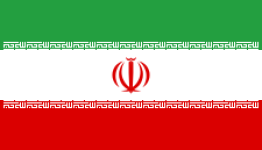

Treasury Secretary Scott Bessent is set to unveil new sanctions against Iran on Monday. He has described it as the "single greatest financial offensive ever" and said the goal is to sever all financial lifelines supporting the regime. President Trump dubbed the move an "economic D-Day" and pledged to target other countries that provide financial lifelines to Tehran.
In anticipation, the Iranian rial plunged to a record low. The U.S. already imposes extensive sanctions on Iran, some dating back almost 50 years, and in June of this year imposed further penalties on entities that helped Iran evade existing restrictions. A months-long U.S. naval blockade has cut off most goods to Iran from the outside world.
Bessent wrote in an editorial for the Financial Times: "Our objective is to sever every economic lifeline that sustains the tyrannical regime until Tehran stands alone." He referenced countries still trading with Iran, including China, which historically buys about 90% of Iran’s oil.
Analysts question the utility of fresh sanctions. Former U.S. diplomat Alan Eyre told NPR that the U.S. has already targeted the low-hanging, mid-hanging and high-hanging fruit, and that there are no new effective sanctions.
Meanwhile, Iran’s new security chief, Mohsen Rezaei, warned in a state TV interview that Iran would retaliate "seismically" to the new economic warfare. He warned Gulf states that any country partnering in the new sanctions would be considered an enemy and a target. Rezaei said Iran would further target oil tankers transiting the Persian Gulf on the Omani side of the Strait of Hormuz, warning that "not even a single drop of oil will leave the region."
These actions could further hamper oil supplies, as Iran currently does not interfere in these routes. Energy exports from the Gulf region have already suffered the biggest disruption in history due to the war and Iran’s closure of the Strait of Hormuz.
On the domestic front, Iran’s economy is already struggling, with double-digit inflation and currency devaluation. The Statistical Centre of Iran reports inflation at almost 90%. An NPR interview with a 30-year-old Iranian woman revealed that ordinary Iranians are buying food on credit because they lack cash. She said lifesaving medicines like insulin have become too expensive, and daily life is increasingly difficult with frequent power cuts and rising unemployment.
These economic pains have fueled protests earlier this year, which were met with a deadly government crackdown.